SEL in 20 Years: In an AI-Driven World, Being “Streetwise” is the first thing to learn
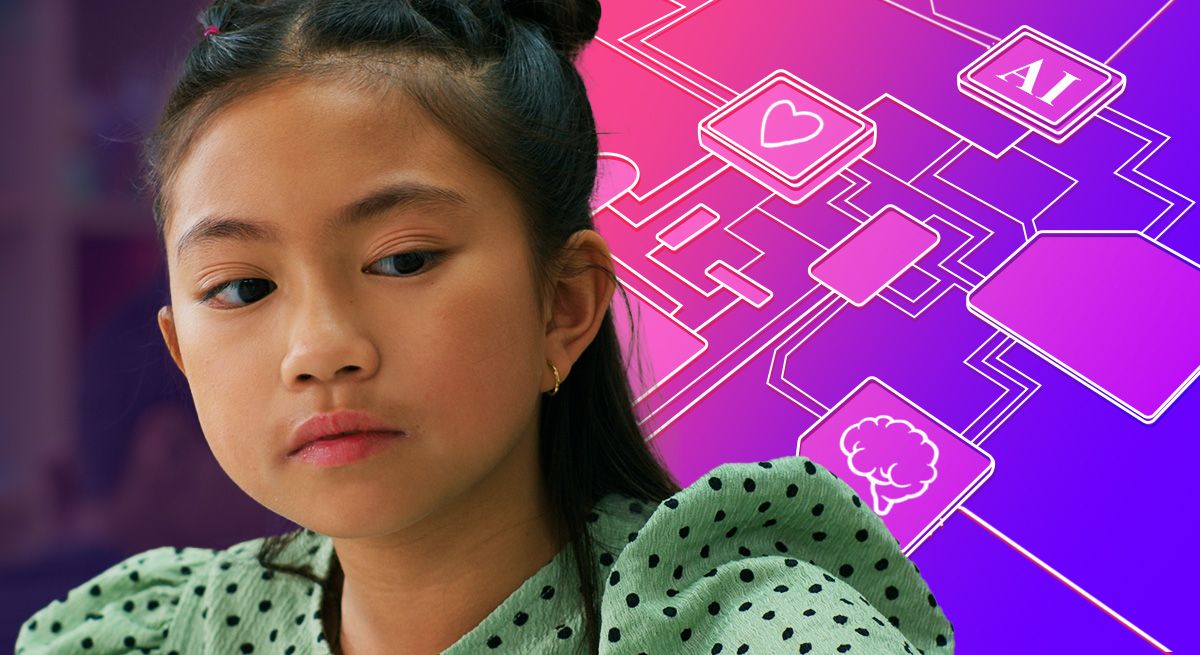
Traditional SEL is failing. Discover why “streetwise” situational awareness, daily wellness data, and AI-driven insights are the future of K-12 student development and school climate.
Introduction: SEL at a Crossroads
Let’s start by saying the quiet part out loud:
SEL isn’t failing because teachers don’t care.
It’s failing because most programs were designed for a version of school that no longer exists.
Teachers are carrying heavier behavioral loads.
Students are navigating more emotional complexity.
Schools are being asked to do more, faster, with fewer adults available to notice, intervene, and support students in real time, and less margin to absorb disruption when things go wrong.
So, when SEL shows up as one more program, one more scope and sequence, or one more thing to prep, the outcome is predictable: it looks good on paper and disappears by Tuesday.
That’s not a people problem.
That’s a design problem.
Over the next 20 years, under the pressure of AI, automation, misinformation, and nonstop digital influence, SEL will either evolve into something practical and usable or quietly become irrelevant.
The version that survives won’t be softer or bigger.
It will be streetwise.
Not SEL built for compliance.
Not SEL optimized for reports.
But SEL actually works in real classrooms, on real days, with real constraints.
Because in an AI-driven world, being streetwise, emotionally aware, socially intelligent, and capable of judgment under pressure will be the first skill students must learn.
Hard Truth #1
If your SEL requires “perfect conditions” to work, it’s already failing.
In the cockpit of a real classroom, things are noisy, fast, and high-pressure. You don’t need a 50-page manual when the alarms are going off; you need an instrument panel that gives you the right signals at the right time.
How SEL Started, and Where It Fell Short
For two decades, Social Emotional Learning (SEL) followed a predictable path. posters in the hallway, scripted lessons, and well-intentioned curriculum binders.
We treated whole-child development like a Subject something to be “taught” for 30 minutes and then put away.
But emotional intelligence isn’t a subject;
It’s a muscle.
The failure wasn’t in the intent; it was in the delivery.
SEL became optimized for compliance over connection. Rigid pacing guides ignored a basic truth every principal knows: a crisis in the cafeteria at lunch can completely change the emotional temperature of the third period.
When SEL can’t flex with reality, teachers quietly abandon it.
This is the core issue behind SEL implementation consistency: Programs built to look complete on paper rarely survive real classrooms.”
When a system is too heavy to move, teachers leave it behind.
The AI Shockwave: Why Digital Citizenship Isn't Enough
Today’s students aren’t just growing up with technology.
They’re being co-parented by algorithms.
AI in education is often framed as a productivity tool. But its deepest impact is on student wellness and identity.
Students today are navigating:
- Algorithmic Socialization: self-worth is shaped by engagement loops they don’t understand
- Emotional Misinformation: deepfakes, distorted narratives, and synthetic reality
- Automation Anxiety: uncertainty about relevance in a world where tasks are automated.
In this environment, academic knowledge isn’t enough.
In an AI-driven environment, academic knowledge alone is no longer enough. The most un-hackable skills students can develop are human ones: the ability to read a room, regulate emotions under pressure, navigate conflict and power dynamics, and make ethical decisions when rules aren’t clear. This growing gap between technical competence and human development is explored in The Anxious Generation by psychologist Jonathan Haidt, which examines how modern environments are reshaping young people’s emotional and social capacities.
- Reading a room
- Managing emotion under pressure
- Navigating conflict and power dynamics
- Making ethical decisions when rules aren’t clear
If SEL doesn’t address the digital oxygen students breathe, it becomes obsolete.
Why “Being Streetwise” Is the New Core SEL Skill
To be streetwise in the AI era is to have situational awareness.
It’s the ability to enter a physical or digital space, recognize the emotional traps, and regulate a response before escalation.
Traditional SEL often focused on being nice.
Streetwise SEL focuses on social navigation.
It teaches students how to:
- Protect their mental health in attention economies
- Recognize manipulation and emotional bait
- Respond, not react
- Apply empathy without losing boundaries
Streetwise SEL isn’t about knowing emotions.
It’s about using emotional intelligence when the moment is live, the stakes are real, and no one is handing you a script.
Soft Skills vs. Survival Skills
Hard Truth #2
Most districts already “have SEL.”
What they don’t have is daily use.
Completion is not implementation.
Consistency, not curriculum quality, is the real bottleneck for student growth.
Why Whole-Child Support Fails Without Daily Data
You cannot support what you cannot see.
Yet most schools still rely on annual or bi-annual surveys to measure school climate and student wellness.
That’s like trying to drive a car by looking at a map of where you were six months ago.
By the time issues surface in reports, the student has already disengaged.
This is the problem outlined in Why Whole-Child Support Fails Without Daily Student Wellness Data.
Without frequent, lightweight check-ins:
- Micro-signals of distress are missed
- Quiet students slip through unnoticed
- Interventions arrive too late
Learning analytics shouldn’t stop at academics.
They should function as the emotional instrument panel, helping teachers know who needs a 60-second connection today.
The Future: Netflix-Style SEL & Adaptive Learning
The future of SEL is not another binder.
It’s short, frequent, relevant, and frictionless.
Students engage when SEL feels familiar, modern, and responsive, not when it feels like a lecture.
This is the logic behind The Netflix-Style SEL Lesson: High Student Engagement with Zero Teacher Prep.
When SEL:
- Requires no prep
- Fits inside the school day
- Adapts to real-time needs
Usage increases. And when usage increases, outcomes follow.
Why Fixed Models Fail in Real Life
Life doesn’t happen in linear sequences.
If a community experiences trauma on Monday, forcing “Lesson 4: Time Management” on Tuesday isn’t just ineffective, it’s disconnected.
This is why Why Fixed SEL Scope and Sequences Fail in Real Classrooms resonates so strongly with school leaders.
The future of SEL is adaptive.
It meets students where they are, when they are there.
Hard Truth #3
Whole-child support without daily data is just well-intentioned guessing.
Most emotional signals are invisible until it’s too late to intervene.
The Role of AI in Making SEL Work (Not Replace Humans)
AI’s real value in SEL isn’t automation.
It’s pattern recognition.
By analyzing behavioral and emotional signals over time, AI can surface trends a human eye can’t consistently detect.
Not to replace teachers, but to support them.
The system doesn’t say what to feel.
It says: “Something changed here. You may want to check in.”
This reduces implementation fatigue and restores what educators do best: human connection.
AI scales the signal, not the relationship.
What Schools Must Stop Doing
- top one-size-fits-all SEL: Different communities require different streetwise skills
- Stop relying on annual surveys: Mental health changes daily; data should too
- Stop compliance-based SEL: When teachers check boxes, students check out
What Schools Must Start Doing Now
- Prioritize daily signals: 60-second check-ins beat 60-minute lessons
- Teach risk literacy: Help students navigate emotional traps online and offline
- Give teachers margin: Zero-prep, low-friction tools make consistency possible
Conclusion: The Next Generation Doesn’t Need More Lessons, They Need Better Signals
The next generation won’t be judged by how well they follow instructions.
They’ll be judged by how well they:
- Read situations when rules aren’t clear
- Regulate emotion under pressure
- Navigate power, conflict, and uncertainty
- Make sound decisions in real time
That’s not something a static SEL program can teach once a week.
That’s streetwise SEL.
The future belongs to systems that:
- Work inside the school day, not around it
- Reduce teacher friction instead of adding it
- Adapt to student reality
- Surface emotional signals early
The goal of SEL was never perfect behavior.
It was prepared by humans.
In the next 20 years, the schools that succeed won’t be the ones with the most programs.
They’ll be the ones who made SEL usable, adaptive, and real.
The Future of SEL Is Streetwise.
If students are expected to navigate complexity and high-stakes situations, schools must detect stress, conflict, and disengagement as they happen. Streetwise SEL makes the invisible visible, giving educators the signals they need to intervene effectively.
Traditional SEL is failing. Discover why “streetwise” situational awareness, daily wellness data, and AI-driven insights are the future of K-12 student development and school climate.
Introduction: SEL at a Crossroads
Let’s start by saying the quiet part out loud:
SEL isn’t failing because teachers don’t care.
It’s failing because most programs were designed for a version of school that no longer exists.
Teachers are carrying heavier behavioral loads.
Students are navigating more emotional complexity.
Schools are being asked to do more, faster, with fewer adults available to notice, intervene, and support students in real time, and less margin to absorb disruption when things go wrong.
So, when SEL shows up as one more program, one more scope and sequence, or one more thing to prep, the outcome is predictable: it looks good on paper and disappears by Tuesday.
That’s not a people problem.
That’s a design problem.
Over the next 20 years, under the pressure of AI, automation, misinformation, and nonstop digital influence, SEL will either evolve into something practical and usable or quietly become irrelevant.
The version that survives won’t be softer or bigger.
It will be streetwise.
Not SEL built for compliance.
Not SEL optimized for reports.
But SEL actually works in real classrooms, on real days, with real constraints.
Because in an AI-driven world, being streetwise, emotionally aware, socially intelligent, and capable of judgment under pressure will be the first skill students must learn.
Hard Truth #1
If your SEL requires “perfect conditions” to work, it’s already failing.
In the cockpit of a real classroom, things are noisy, fast, and high-pressure. You don’t need a 50-page manual when the alarms are going off; you need an instrument panel that gives you the right signals at the right time.
How SEL Started, and Where It Fell Short
For two decades, Social Emotional Learning (SEL) followed a predictable path. posters in the hallway, scripted lessons, and well-intentioned curriculum binders.
We treated whole-child development like a Subject something to be “taught” for 30 minutes and then put away.
But emotional intelligence isn’t a subject;
It’s a muscle.
The failure wasn’t in the intent; it was in the delivery.
SEL became optimized for compliance over connection. Rigid pacing guides ignored a basic truth every principal knows: a crisis in the cafeteria at lunch can completely change the emotional temperature of the third period.
When SEL can’t flex with reality, teachers quietly abandon it.
This is the core issue behind SEL implementation consistency: Programs built to look complete on paper rarely survive real classrooms.”
When a system is too heavy to move, teachers leave it behind.
The AI Shockwave: Why Digital Citizenship Isn't Enough
Today’s students aren’t just growing up with technology.
They’re being co-parented by algorithms.
AI in education is often framed as a productivity tool. But its deepest impact is on student wellness and identity.
Students today are navigating:
- Algorithmic Socialization: self-worth is shaped by engagement loops they don’t understand
- Emotional Misinformation: deepfakes, distorted narratives, and synthetic reality
- Automation Anxiety: uncertainty about relevance in a world where tasks are automated.
In this environment, academic knowledge isn’t enough.
In an AI-driven environment, academic knowledge alone is no longer enough. The most un-hackable skills students can develop are human ones: the ability to read a room, regulate emotions under pressure, navigate conflict and power dynamics, and make ethical decisions when rules aren’t clear. This growing gap between technical competence and human development is explored in The Anxious Generation by psychologist Jonathan Haidt, which examines how modern environments are reshaping young people’s emotional and social capacities.
- Reading a room
- Managing emotion under pressure
- Navigating conflict and power dynamics
- Making ethical decisions when rules aren’t clear
If SEL doesn’t address the digital oxygen students breathe, it becomes obsolete.
Why “Being Streetwise” Is the New Core SEL Skill
To be streetwise in the AI era is to have situational awareness.
It’s the ability to enter a physical or digital space, recognize the emotional traps, and regulate a response before escalation.
Traditional SEL often focused on being nice.
Streetwise SEL focuses on social navigation.
It teaches students how to:
- Protect their mental health in attention economies
- Recognize manipulation and emotional bait
- Respond, not react
- Apply empathy without losing boundaries
Streetwise SEL isn’t about knowing emotions.
It’s about using emotional intelligence when the moment is live, the stakes are real, and no one is handing you a script.
Soft Skills vs. Survival Skills
Hard Truth #2
Most districts already “have SEL.”
What they don’t have is daily use.
Completion is not implementation.
Consistency, not curriculum quality, is the real bottleneck for student growth.
Why Whole-Child Support Fails Without Daily Data
You cannot support what you cannot see.
Yet most schools still rely on annual or bi-annual surveys to measure school climate and student wellness.
That’s like trying to drive a car by looking at a map of where you were six months ago.
By the time issues surface in reports, the student has already disengaged.
This is the problem outlined in Why Whole-Child Support Fails Without Daily Student Wellness Data.
Without frequent, lightweight check-ins:
- Micro-signals of distress are missed
- Quiet students slip through unnoticed
- Interventions arrive too late
Learning analytics shouldn’t stop at academics.
They should function as the emotional instrument panel, helping teachers know who needs a 60-second connection today.
The Future: Netflix-Style SEL & Adaptive Learning
The future of SEL is not another binder.
It’s short, frequent, relevant, and frictionless.
Students engage when SEL feels familiar, modern, and responsive, not when it feels like a lecture.
This is the logic behind The Netflix-Style SEL Lesson: High Student Engagement with Zero Teacher Prep.
When SEL:
- Requires no prep
- Fits inside the school day
- Adapts to real-time needs
Usage increases. And when usage increases, outcomes follow.
Why Fixed Models Fail in Real Life
Life doesn’t happen in linear sequences.
If a community experiences trauma on Monday, forcing “Lesson 4: Time Management” on Tuesday isn’t just ineffective, it’s disconnected.
This is why Why Fixed SEL Scope and Sequences Fail in Real Classrooms resonates so strongly with school leaders.
The future of SEL is adaptive.
It meets students where they are, when they are there.
Hard Truth #3
Whole-child support without daily data is just well-intentioned guessing.
Most emotional signals are invisible until it’s too late to intervene.
The Role of AI in Making SEL Work (Not Replace Humans)
AI’s real value in SEL isn’t automation.
It’s pattern recognition.
By analyzing behavioral and emotional signals over time, AI can surface trends a human eye can’t consistently detect.
Not to replace teachers, but to support them.
The system doesn’t say what to feel.
It says: “Something changed here. You may want to check in.”
This reduces implementation fatigue and restores what educators do best: human connection.
AI scales the signal, not the relationship.
What Schools Must Stop Doing
- top one-size-fits-all SEL: Different communities require different streetwise skills
- Stop relying on annual surveys: Mental health changes daily; data should too
- Stop compliance-based SEL: When teachers check boxes, students check out
What Schools Must Start Doing Now
- Prioritize daily signals: 60-second check-ins beat 60-minute lessons
- Teach risk literacy: Help students navigate emotional traps online and offline
- Give teachers margin: Zero-prep, low-friction tools make consistency possible
Conclusion: The Next Generation Doesn’t Need More Lessons, They Need Better Signals
The next generation won’t be judged by how well they follow instructions.
They’ll be judged by how well they:
- Read situations when rules aren’t clear
- Regulate emotion under pressure
- Navigate power, conflict, and uncertainty
- Make sound decisions in real time
That’s not something a static SEL program can teach once a week.
That’s streetwise SEL.
The future belongs to systems that:
- Work inside the school day, not around it
- Reduce teacher friction instead of adding it
- Adapt to student reality
- Surface emotional signals early
The goal of SEL was never perfect behavior.
It was prepared by humans.
In the next 20 years, the schools that succeed won’t be the ones with the most programs.
They’ll be the ones who made SEL usable, adaptive, and real.
The Future of SEL Is Streetwise.
If students are expected to navigate complexity and high-stakes situations, schools must detect stress, conflict, and disengagement as they happen. Streetwise SEL makes the invisible visible, giving educators the signals they need to intervene effectively.